
Cannabis & Alzheimer’s: Agitation, Sleep, Appetite — What the Evidence Says
For families facing Alzheimer’s, the hardest symptoms are often the behavioral ones—agitation, sundowning, sleep disruption, appetite loss. In my ACMPR work, I sat with caregivers who were desperate for calm, not just cognition. Cannabis isn’t a cure for Alzheimer’s, but certain preparations have shown measurable help with agitation, sleep, and appetite in small clinical trials.
Why Caregivers Look to Cannabis
Caring for someone with Alzheimer’s isn’t just about memory loss. Families will tell you it’s the long evenings of pacing, the sudden outbursts, the nights without sleep, and the meals that go untouched. These are the moments that break you down as a caregiver. And they’re also the reasons many families begin to ask about cannabis.
What cannabis offers in this context isn’t a cure. It’s relief from the edges of the disease — the agitation, the restlessness, the loss of appetite. In many cases, even a small improvement can transform the daily routine. If someone sleeps for four hours straight instead of waking up every 45 minutes, that’s life-changing. If they eat half a plate of food instead of nothing, it’s progress worth celebrating.
For caregivers, cannabis is not about chasing a high. It’s about finding tools that can make the hardest symptoms just a little easier. And in Alzheimer’s care, sometimes those little wins add up to a better quality of life for both the patient and the family supporting them.
What We’ve Learned From Israel
When it comes to medical cannabis research, Israel has led the way. Doctors there have been studying cannabis in dementia care for years, partly because so many older adults with Alzheimer’s live in long-term care settings. They’ve published some of the earliest and most detailed reports on how cannabis might ease symptoms like agitation, aggression, and appetite loss.
One of the key lessons from the Israeli research is that cannabis can be used safely in older adults — but only when dosing is cautious and closely monitored. Small amounts of THC have been trialed for evening agitation, while CBD-rich oils are studied for daytime use. Caregivers in these studies often report fewer angry outbursts, calmer nights, and patients who begin eating again after weeks of food refusal.
It’s not a miracle cure, but it’s enough to spark global interest. Today, clinics around the world often reference this Israeli work when considering cannabis for dementia care.
How It May Help
Agitation & Distress Behaviors
One of the most challenging symptoms of Alzheimer’s is agitation — restlessness, aggression, or sundowning that wears down both patients and caregivers. In a randomized controlled trial, the synthetic THC analogue nabilone significantly reduced agitation scores in people with moderate to severe Alzheimer’s. Caregivers reported calmer evenings and fewer episodes of aggression, though sedation was common and required careful monitoring of dose timing and next-morning function.
👉 Herrmann N, et al. Am J Geriatr Psychiatry (2019)
Behavior & Weight/Appetite
Appetite loss and weight decline are common in late-stage Alzheimer’s, often paired with refusal to eat or increased pacing. A placebo-controlled crossover trial found that dronabinol (a THC-based medicine) not only improved disturbed behaviors like pacing and verbal outbursts but also led to measurable weight gain in patients who had been losing weight. These findings suggest that THC can positively affect both behavioral stability and nutritional status when introduced cautiously.
👉 Volicer L, et al. Int J Geriatr Psychiatry (1997)
Appetite & Weight Maintenance
Beyond behavior, cannabis is well known for its ability to stimulate appetite. In Alzheimer’s, where malnutrition accelerates decline, even modest improvements in food intake can improve quality of life. Low-dose THC, given with or before meals, has shown promise in encouraging eating and stabilizing body weight. The benefit comes with a caveat: sedation and disorientation can occur if the dose is too high, making start-low and go-slow essential.
👉 Volicer L, et al. Int J Geriatr Psychiatry (1997)
CBD-Rich Oils
While THC-based medicines dominate the evidence so far, newer research has tested CBD-rich cannabis oils. In a randomized controlled trial of dementia patients, including those with Alzheimer’s, a high-CBD oil (“Avidekel”) reduced agitation compared to placebo, with only mild side effects like drowsiness and decreased appetite in some participants. CBD’s gentler profile makes it appealing for daytime use, particularly where sedation from THC is a concern.
👉 Hermush V, et al. Frontiers in Medicine (2022)
Caregiver Guidance in Plain English
If you’re a caregiver thinking about cannabis, the most important rule is start low, go slow. For Alzheimer’s patients, even a fraction of a milligram of THC can be felt. Begin with the smallest amount possible, keep notes, and don’t increase the dose until you’ve seen how your loved one responds over several days.
Think about time of day: THC at night may help with sleep, but it can cause confusion if used in the morning. CBD may be a better fit for daytime anxiety or agitation without heavy sedation. Always test new products when a caregiver is present, and try them at times when extra support is available in case the response is stronger than expected.
Don’t forget about tracking. Write down what was given, when, and how the patient responded. Over time, this journal becomes a guidebook for what actually works, and it’s invaluable if you ever consult with a healthcare provider about cannabis use.
Hope & Limitations
It’s important to be hopeful — and realistic. Cannabis can bring relief to some of the hardest symptoms of Alzheimer’s, but it doesn’t slow or reverse the disease. Families who try cannabis sometimes see dramatic improvements in appetite or calmer behavior, while others see only small changes.
That doesn’t make the effort wasted. For many families, even small improvements matter. A calmer evening, a better night’s sleep, or a few more bites of food can ease the strain of caregiving. Cannabis should be thought of as one tool in the toolbox — not a cure, but a support that may make the journey of Alzheimer’s just a little lighter.
Safety notes specific to Alzheimer’s
High fall risk: sedation, dizziness, and orthostatic hypotension can increase falls.
Cognition: higher THC can worsen short-term memory and attention—aim for the lowest effective dose and review daytime functioning after any night dose.
Drug interactions: cannabinoids use CYP450 pathways. Review warfarin, sedatives/opioids, antipsychotics/antidepressants, anticonvulsants, and cardiac meds with a clinician.
Caregiver oversight: keep dosing logs; introduce one change at a time; reassess every 3–7 days.
FAQ — Cannabis & Alzheimer’s
1. Can cannabis slow the progression of Alzheimer’s?
No. Current research shows cannabis does not slow or reverse Alzheimer’s disease. The benefits are focused on symptom relief — easing agitation, improving sleep, and stimulating appetite.
2. What’s the difference between THC and CBD for Alzheimer’s?
THC is most effective for agitation, sleep, and appetite. It can also cause sedation and confusion at higher doses.
CBD is non-intoxicating and may help with daytime anxiety or agitation. It’s often used when families want gentler support without a “high.”
3. Is cannabis safe for older adults with dementia?
Yes, with careful dosing. Older adults are more sensitive, so start very low (0.5–1 mg THC or 5–10 mg CBD). Always monitor for dizziness, confusion, or oversedation, which can increase fall risk.
4. Can cannabis help with aggression or sundowning?
Some studies show cannabis reduces evening agitation and aggression, especially when small doses of THC are given later in the day. Caregivers often report calmer nights and fewer angry outbursts.
5. How does cannabis affect appetite and weight in Alzheimer’s?
THC is known to stimulate appetite. In clinical trials, Alzheimer’s patients given THC-based medicines gained weight and ate more regularly after refusing food. This can help maintain nutrition and strength.
6. What products work best — oils, capsules, or flower?
Oils and capsules are easiest for consistent dosing in older adults.
Sublingual tinctures act faster than capsules and are easy to measure.
Vaporized cannabis works quickly but may not be suitable for frail patients with lung or heart conditions.
7. Are there risks of mixing cannabis with other medications?
Yes. Cannabis can interact with blood thinners, sedatives, antidepressants, and heart medications. Always check with a healthcare provider before starting cannabis if other prescriptions are involved.
8. What should caregivers watch out for when trying cannabis?
Increased drowsiness or confusion
Worsening agitation at the wrong dose
Dizziness or falls
Appetite changes (up or down)
Interactions with prescribed medications
Keeping a simple cannabis journal can help track what works and prevent problems.
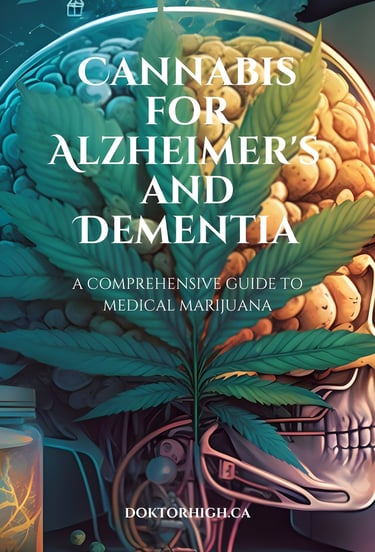
Want to go deeper?
For a complete guide to cannabis and Alzheimer’s care — including studies, caregiver strategies, and practical dosing insights — check out my book. It’s written in plain language for families and caregivers who need answers now.